


Most restaurants do not fail because the food is bad. They fail because nobody remembers why they exist. In 2026, that gap has only widened. Cities are saturated with cafés, QSR formats, and cloud kitchens that look and feel interchangeable. Every brand claims to be premium, authentic, or experience-led. The result is not competition. It is noise. And in noisy markets, food alone does not win. Clarity does.
That is where restaurant brand strategy stops being a creative exercise and becomes a business decision. Because if your café cannot communicate what it stands for within a few seconds, it will not get chosen. And if it gets chosen once but fails to create recall, it will not be repeated. This is the real challenge founders are dealing with today. Not footfall. Not awareness. But memorability and consistency at scale.
This guide breaks down what restaurant brand strategy actually means in 2026, why it has become non-negotiable for cafés and QSR brands, and how some of the most distinct emerging brands are using it to build demand, create loyalty, and expand without dilution. The patterns are not obvious on the surface. But once you see them, they become impossible to ignore.
The Real Definition of Restaurant Brand Strategy
Restaurant branding is often misunderstood because founders approach it too late. By the time branding becomes a conversation, the lease is signed, interiors are underway, and the menu has already been decided. At that point, branding gets reduced to execution: a logo, a colour palette, some wall graphics, and an Instagram page. But a strategy should have existed before any of these decisions were made.
Restaurant brand strategy is the alignment of what you serve, who it is for, why it matters, and how that belief shows up consistently across food, space, service, packaging, and communication. It is not a layer added on top. It is a system that shapes every operational decision.
The mistake most founders make is assuming the product will speak for itself. But in a category where customers cannot taste before choosing, the product never gets a chance unless the brand earns that first decision. That decision is not driven by ingredients or recipes. It is driven by perception. And perception is built long before the first bite.
The Overlooked Layer: Verbal Identity
In hospitality branding, visual identity gets most of the attention. But verbal identity is equally critical, especially in a digital-first discovery environment. Before a customer visits your café, they have already interacted with your brand through listings, social media, and reviews.
The tone of voice across these touchpoints shapes perception. Whether the brand sounds playful, premium, direct, or educational, what matters is consistency. A mismatch between how a brand looks and how it communicates creates friction. And friction reduces trust.
Clear verbal identity ensures that the brand feels cohesive across platforms. It aligns expectations before the physical experience even begins. In a category driven by perception, that alignment becomes a competitive advantage.
Positioning Is the Discipline of Saying No
At the centre of every strong restaurant brand is positioning, but not in the way most founders think about it. Positioning is not what you say you are. It is what you deliberately choose not to be. It is the discipline of narrowing your focus until the brand becomes memorable.
Smash Guys illustrates this clearly. In a city flooded with burger brands, they did not attempt to compete across the entire category. They focused on smash burgers and leaned into that identity fully. This decision influenced everything from product development to communication.
What makes their strategy interesting is not just product focus but how they built demand. By building in public and involving early customers in the process, they turned consumers into contributors. The brand did not present itself as finished. It presented itself as evolving. That transparency created trust and early community ownership, which is significantly more powerful than traditional marketing at that stage.
The result is not just differentiation but clarity. Customers know exactly what to expect. There is no confusion about what the brand stands for. And that clarity accelerates adoption.
The Strategy Layer: What Winning Restaurants, Cafes & QSRs Are Actually Doing Differently
01. Benne: Throughput-Led Branding and Experience Redesign
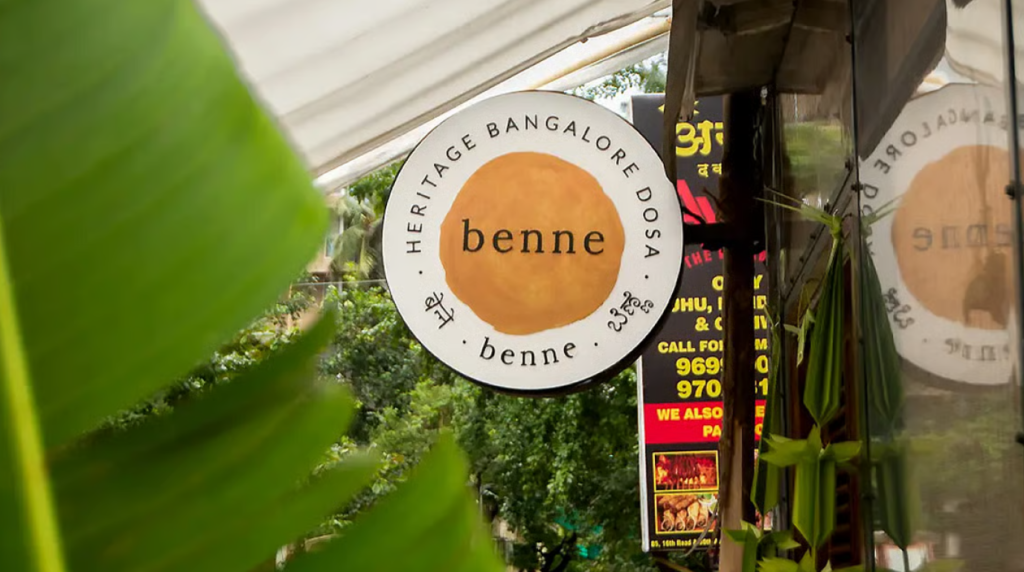
Benne is not a dosa brand. It is a response to changing consumption behaviour. Instead of reinventing the product, the brand redesigned the experience to match speed, convenience, and repeat consumption in dense urban markets.
The insight was simple but powerful. The problem was not demand. It was time. By compressing the experience, the brand unlocked scale without expanding complexity.
• 800+ dosas daily from a single outlet
• ₹250 average spend driving repeat behaviour
• ₹1 crore monthly revenue from depth
This focus creates operational leverage. High throughput leads to predictable demand, stronger margins through add-ons, and a system that is easier to scale without dilution. Benne did not innovate on food. It built a faster system around it.
02. Blue Tokai: Education-Led Branding and Trust Creation
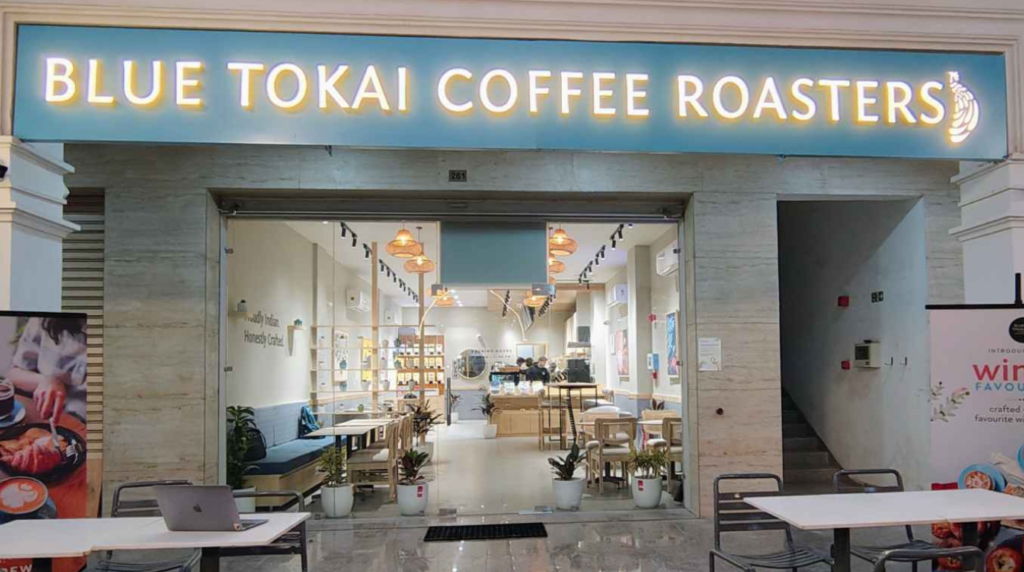
Blue Tokai is not just selling coffee. It is building a coffee culture. Instead of competing in existing segments, it created a new space that feels Indian, premium, and approachable. The core strategy was not visibility. It was education. By helping customers understand coffee, the brand increased confidence and willingness to pay.
• 110+ cafés built on consistent experience
• ₹1400 crore brand value through trust
• Fresh roasting builds credibility and loyalty
This approach compounds over time. Education leads to engagement, engagement builds trust, and trust reduces dependence on discounts or heavy marketing. Blue Tokai did not just sell coffee. It made people care about it.
03. Subko: Cultural Positioning and Identity-Led Branding
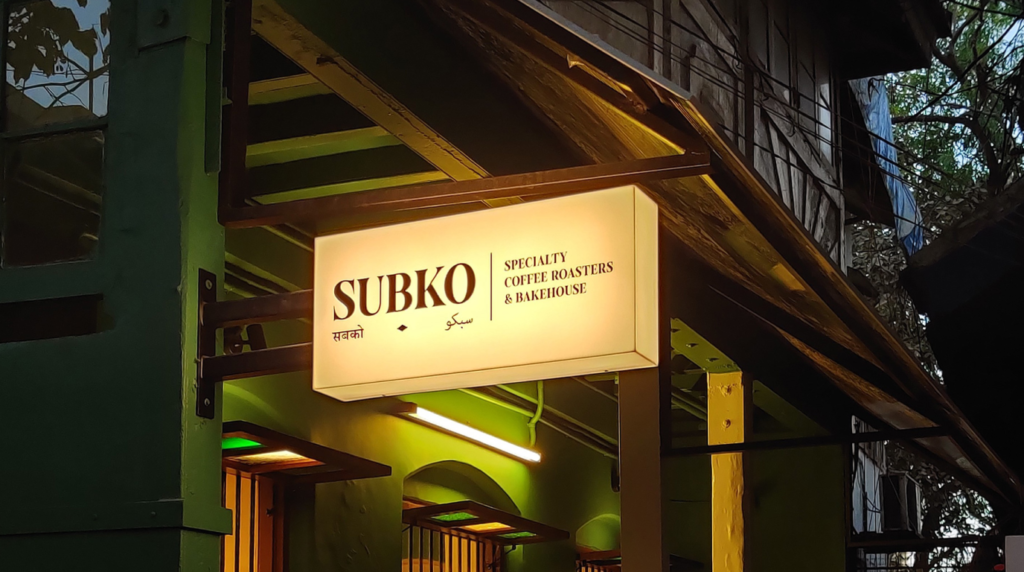
Subko is not a conventional café brand. It is a cultural statement built on the subcontinent’s identity. Instead of following global aesthetics, it builds meaning through local depth. The strategy is rooted in belief. Culture is not styling here. It is the foundation of every decision across design, product, and experience.
• Multi-script identity reflects subcontinental cultural depth
• Box packaging makes product tactile and premium
• ₹80+ crore funding supports expansion with identity
This creates a strong moat. Cultural positioning is harder to copy because it requires consistency, conviction, and long-term commitment. Subko is not designed to look premium. It is designed to mean something.
04. Smash Guys: Build-in-Public Branding and Community-Led Growth
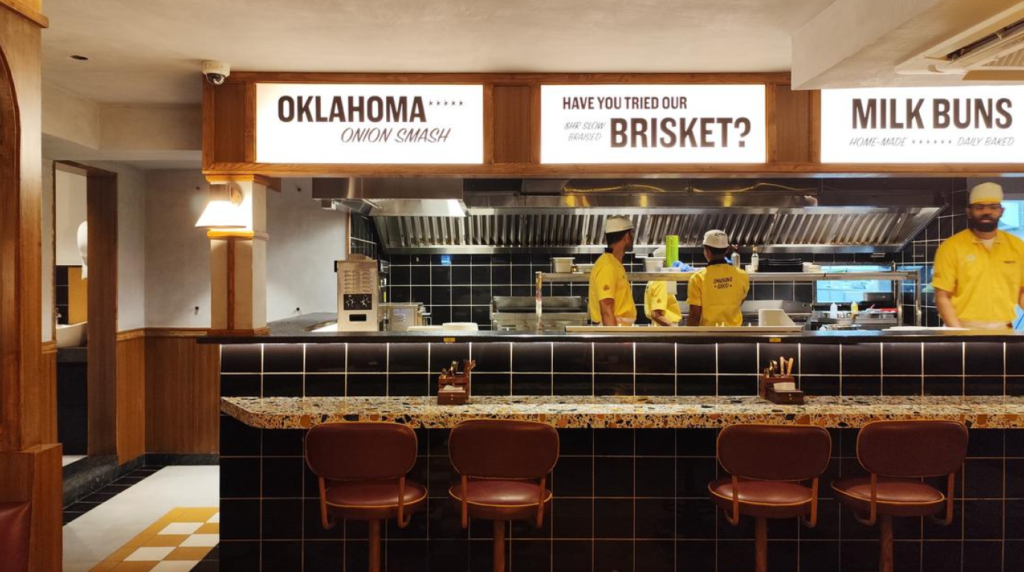
Smash Guys is not just launching a burger brand. It is building demand in public. By sharing the journey openly, it turns customers into participants instead of passive buyers. The strategy shifts how brands are built. Instead of marketing after launch, the process itself becomes the story that drives engagement.
• Build-in-public creates early community ownership
• Smash burger focus drives category clarity
• ₹100 crore vision guides structured expansion
This creates stronger early traction. Community-led growth compounds faster because customers feel invested in the outcome. Smash Guys is not just selling burgers. It is building involvement.
05. The Croffle Guys: Category Creation and Instant Clarity
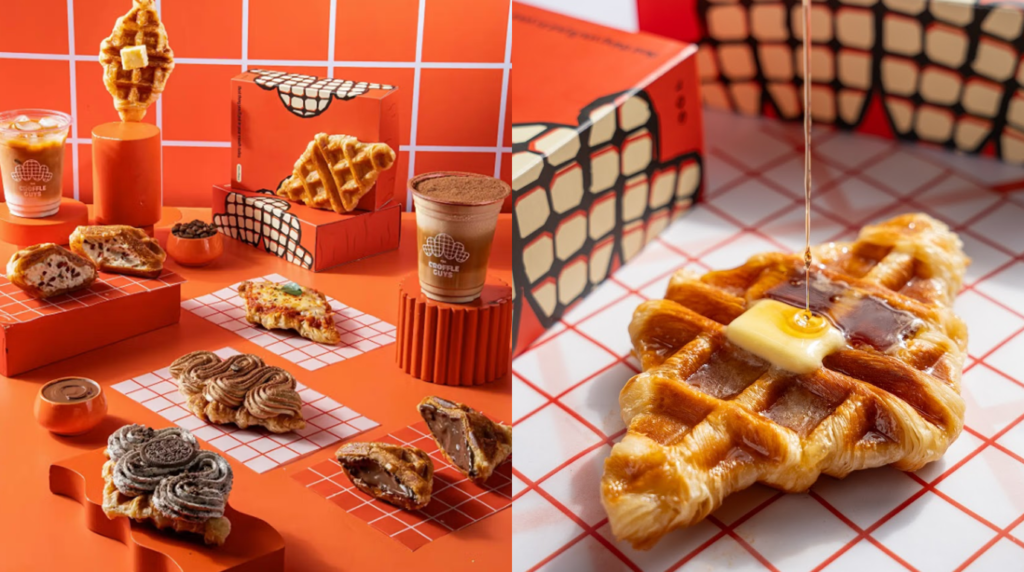
The Croffle Guys are not operating in a known category. They are introducing one. That makes clarity the most important part of the brand strategy. The challenge is not competition. It is comprehension. The brand solves this by making the product instantly understandable and visually appealing.
• Croffle positioning simplified for instant understanding
• Playful identity drives shareability and discovery
• Strong traction across urban and digital platforms
This reduces friction. When customers understand quickly, trial increases. When trial increases, the category grows with the brand. The Croffle Guys are not just branding a product. They are building a category.
Brand Strategy Snapshot: How These Food Brands Position Themselves
| BRAND | ONE-WORD STRATEGY | CORE POSITIONING LENS | WHAT THEY REALLY SELL | KEY STRATEGIC EDGE |
|---|---|---|---|---|
| Benne | Throughput | Experience compression | Fast, repeatable consumption | High throughput system driving ₹1Cr/month from single outlet |
| Blue Tokai | Education | Coffee awareness | Confidence in premium coffee | Trust-led growth reducing dependency on discounts |
| Subko | Culture | Subcontinental identity | Meaning and belonging | Deep cultural positioning that is hard to replicate |
| Smash Guys | Community | Build-in-public | Participation in brand journey | Early traction through community ownership and visibility |
| The Croffle Guys | Clarity | Category creation | Instant product understanding | Low friction adoption through simple, visual positioning |
Education Creates Willingness to Pay
Most restaurant brands try to sell faster. The more effective ones invest in teaching first. This is where Blue Tokai fundamentally changed how coffee is positioned in India. Instead of competing directly with either low-cost coffee or imported premium chains, they created a new space that felt Indian, premium, and accessible at the same time.
Their strategy was built around education. Instead of pushing products aggressively, they helped customers understand coffee. Brewing methods, roast profiles, sourcing, and flavour notes became part of the experience. This reduced intimidation and increased confidence. When customers understand what they are buying, they are more willing to pay for it.
This approach was supported by a minimal and consistent design system, calm café environments, and a strong focus on transparency in sourcing and freshness. The brand built trust before scale, which allowed it to expand without losing credibility.
What Blue Tokai demonstrates is that pricing power does not come from looking premium. It comes from making the customer feel informed and confident in their choice.
Culture as Strategy, Not Styling
If most brands compete on aesthetics, a few compete on meaning. Subko belongs firmly in the second category. It does not operate like a conventional café brand. It operates as a cultural statement rooted in the subcontinent.
From its earliest decisions, the brand asked a different question. Can a product built in South Asia feel globally relevant without losing its identity. That question shaped everything. The design language incorporates multiple scripts. The packaging references regional print traditions. The sourcing stays deeply local. Even spatial decisions reflect intent, with early locations designed to feel intentionally undiscovered rather than mass accessible.
Subko also challenged format conventions by moving from standard coffee bags to box packaging, turning the product into something tactile and collectible. The design system is not decorative. It is narrative-driven. Every element reinforces the same idea.
What makes this powerful is not just distinctiveness but defensibility. Cultural positioning cannot be easily replicated because it requires belief, not just execution. It forces the brand to stay consistent even when scaling becomes tempting.
Experience Is the Real Product
A common mistake founders make is assuming they are in the business of selling food. In reality, they are in the business of shaping how that food fits into a customer’s life. The product is only one part of that equation.
Benne is not just selling dosa. It is selling speed within familiarity. Blue Tokai is not just selling coffee. It is selling a moment of pause. Smash Guys is not just selling burgers. It is selling indulgence with personality. Subko is not just selling baked goods and coffee. It is selling cultural depth.
This distinction matters because it shifts how decisions are made. Interiors, service behaviour, packaging, music, and communication are no longer secondary. They become core to the experience. And experience, unlike product, is what drives recall.
Consistency is the foundation of that experience. If the brand feels different across locations or touchpoints, trust erodes. Strong restaurant brands are not those that keep changing. They are the ones that stay recognisable.
Packaging and Service as Strategic Assets
In 2026, even dine-in brands cannot ignore packaging. Delivery is a core revenue stream, which means packaging becomes a primary brand touchpoint. It is not just about protection or logistics. It is about communication.
Effective packaging does not require explanation. It signals what the product is, who it is for, and why it is worth choosing. If customers have to think too hard, the brand has already lost clarity.
Service operates in a similar way. Every interaction reinforces or weakens the brand. Benne’s use of young, approachable staff is not incidental. It aligns with the brand’s attempt to make a traditionally slower experience feel more accessible. These decisions may appear operational, but they are deeply strategic.
What Founders Need to Rethink
The most important shift for founders in 2026 is recognising that branding is not something that happens after the business is built. It is what shapes how the business grows. Strategy does not need to be perfect at the start, but it needs to be clear enough to guide decisions.
Founders need to define what their brand stands for beyond the menu, who it is built for, what space it wants to occupy in the customer’s mind, and how that translates into consistent experiences across every touchpoint. Without this clarity, growth becomes reactive. With it, growth becomes intentional.
Final Thought
It is entirely possible to launch a restaurant without a defined strategy. Many brands do. But the moment they attempt to scale, the limitations become visible. Because growth amplifies whatever foundation exists. If the foundation is unclear, expansion multiplies inconsistency. If the foundation is strong, expansion reinforces identity.
The brands that are winning today are not necessarily the most innovative. They are the most decisive. They know what they stand for, and they execute it relentlessly. That is what restaurant brand strategy actually is. Not creativity. But clarity that compounds.