


Most food brands don’t lose because their product is bad. They lose because nobody remembers why they exist. In 2026, that distinction matters more than ever. Shelves are crowded, quick commerce has compressed attention into seconds, and every second brand claims to be “healthy,” “natural,” or “clean.” The result is not competition. It is noise. And in noisy markets, products don’t win. Meaning does.
That is where food brand strategy stops being a branding exercise and becomes a business decision. Because if your brand cannot clearly signal what it stands for within a few seconds, it will not get picked. And if it does get picked once but fails to build trust, it will not get repeated. This is the real challenge founders are facing today. Not awareness. Not distribution. But clarity.
This guide breaks down what food brand strategy actually means in 2026, why it has become non-negotiable for retail food brands, and how some of the fastest-growing health-focused brands have used it to build trust, command premium pricing, and scale across channels.
The Real Definition of Food Brand Strategy
Food brand strategy is often misunderstood because most founders encounter branding too late. By the time they start thinking about it, the product is already built, packaging is underway, and go-to-market pressure is high. So branding becomes execution. Logo, colours, packaging, Instagram. But strategy should have come before all of that. Food brand strategy is the alignment of four things:
- What you sell
- Who it is for
- Why it matters
- How consistently that belief shows up across every touchpoint
It is not a creative output. It is a set of decisions. The problem is that most food brands skip these decisions and jump straight into design. They assume the product will speak for itself. But in a category where customers cannot taste before buying, the product never gets a chance unless the brand earns that first decision.
That first decision is not based on ingredients. It is based on perception. And perception is built through strategy.
Why Food Brand Strategy Is Non-Negotiable in 2026
The food industry has undergone a structural shift. Consumers are no longer passive buyers. They are informed, sceptical, and constantly exposed to alternatives. They read labels. They compare brands. They rely on social proof. And most importantly, they question claims. This has created a new baseline.
You are not just competing on taste or convenience. You are competing on trust. At the same time, distribution has become easier. D2C, marketplaces, and quick commerce platforms have lowered entry barriers. More brands can launch. More SKUs can reach shelves.
But that also means differentiation is harder. When everyone looks similar, says similar things, and uses similar packaging cues, the only way to stand out is to be sharply defined.
That is exactly what brand strategy does. It reduces confusion. It creates a clear reason to choose. It builds consistency across channels. It allows pricing power. Without it, brands are forced into reactive growth. Discounts, performance marketing, influencer bursts. These may drive short-term sales, but they rarely build long-term value. With strategy, growth compounds. Because the brand starts doing the selling.
Positioning: The Core of Food Brand Strategy
At the centre of every strong food brand is one thing. Positioning. And this is where most founders go wrong. They think positioning is what they say. In reality, positioning is what they choose not to say. It is the deliberate narrowing of focus so that the brand becomes memorable. In food, this is especially critical because categories are saturated. There are dozens of protein bars, hundreds of snack brands, and thousands of packaged products competing for attention.
Trying to be everything is the fastest way to become invisible. The brands that break through do something different. They pick a clear space and own it. Not through claims. Through consistency.
The Hidden Power of Verbal Identity
In food branding, visuals get most of the attention. Packaging, colours, design systems. But one of the most underrated drivers of growth is verbal identity. How your brand sounds. This includes your packaging copy, your website language, your social media tone, and even your customer interactions. In 2026, this matters more than ever because brands are consumed digitally before they are experienced physically.
A consumer may see your Instagram post before they see your product. They may read your website before they try your food. In those moments, your voice shapes perception. Brands that succeed here do not try to sound “professional” or “premium.” They sound consistent. Some choose honesty and directness. They speak like a friend who tells you the truth, even when it is uncomfortable.
Others choose warmth and relatability. They speak like someone who understands your daily struggles and offers solutions without judgement. What matters is not the style. What matters is alignment. If your packaging sounds clinical but your social media sounds playful, the brand feels fragmented. And fragmented brands do not build trust.
The Strategy Layer: What Winning Health Food Brands Are Actually Doing Differently
If you step back and look at brands like The Whole Truth, Yoga Bar, Open Secret, Slurrp Farm, and Super You, the differences are not just in products or packaging. They are in how clearly each brand has defined its role in the consumer’s life. These brands are not competing on “health.” That space is too crowded. They are competing on the interpretation of health. And that is where strategy shows up.
01. The Whole Truth: Ingredient-First Branding and Radical Transparency
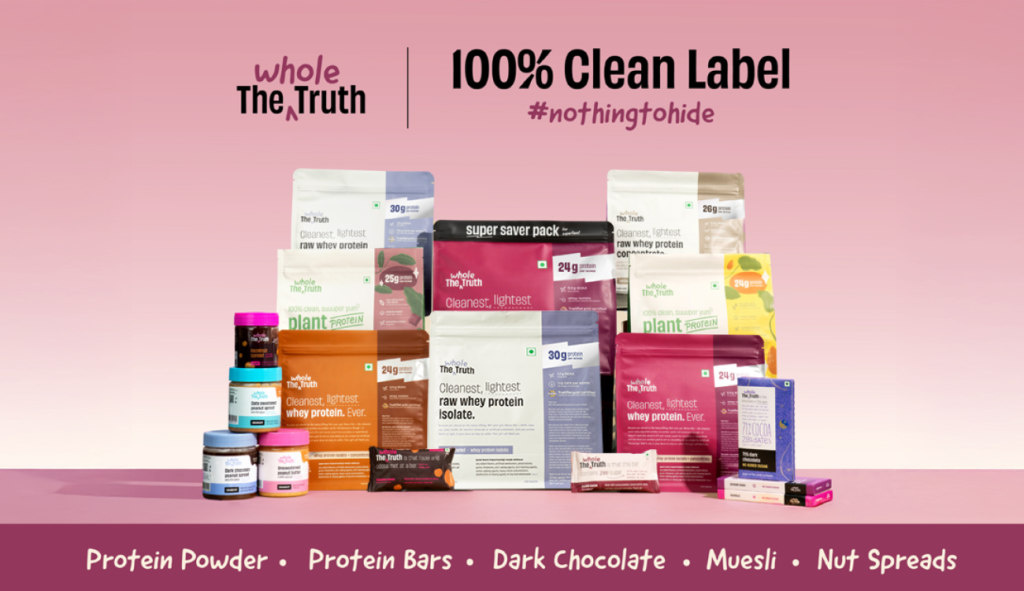
The Whole Truth is not a snack brand. It is a trust correction mechanism.
Its entire strategy is built on one foundational insight: consumers feel misled by food labels. Instead of trying to out-market competitors, the brand chose to remove marketing altogether. No buzzwords. No hidden ingredients. No exaggerated claims. This is what makes their positioning unusually powerful.
They are not saying they are better. They are showing everything. This shows up across every layer of the brand: Their packaging puts ingredients front and centre, eliminating the need for consumers to “decode” labels. Their communication avoids fluff and speaks directly, often calling out industry practices openly.
Their content strategy focuses on educating consumers through podcasts, blogs, and ingredient breakdowns instead of just selling products. The result is not just differentiation. It is an authority.
From a numbers standpoint, the strategy has translated into real business outcomes:
- The brand scaled to over ₹70 crore in revenue and raised $37 million in funding.
- It is widely positioned as one of the most trusted clean-label brands in India.
- What makes this strategy different is not transparency alone.
- It is consistency.
Most brands claim honesty. Very few operationalise it across product, packaging, and communication. The Whole Truth does.
02. Open Secret: Emotional Positioning Through “Honest Indulgence”
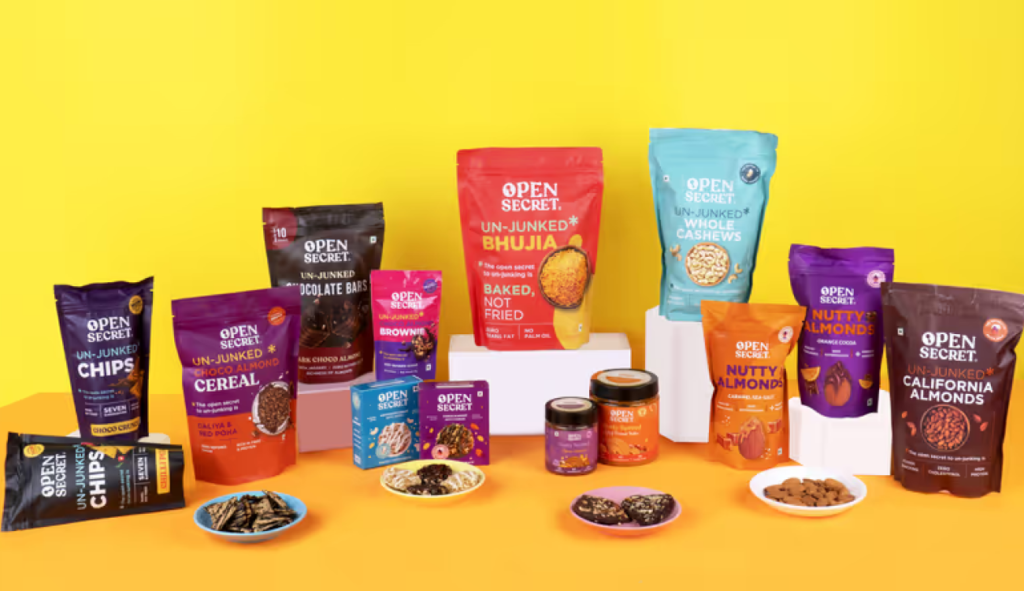
Open Secret identified a very different tension. Consumers want healthier snacks. But they do not want to give up taste or feel judged. Instead of positioning itself as a “healthy alternative,” the brand chose a more nuanced space.
Honest indulgence. This is a strategic reframing. They are not fighting junk food. They are fixing it. This distinction allows them to stay emotionally accessible.
Their strategy is built on three strong pillars:
- Trust through transparency, where the brand openly communicates ingredients and avoids misleading claims
- Relatability, especially for parents who want better food options without complexity
- Storytelling-led packaging, using character-driven narratives to make nutrition engaging for families
Their packaging itself becomes a medium of communication. Characters like “Mr. Crunchy Cashew” turn information into storytelling, reducing friction for both kids and parents. From a performance perspective:
- The brand has achieved over 70% recall within its target audience
- Repeat purchase rates exceed 65%, indicating strong trust loops
- Their hybrid distribution strategy across D2C and retail ensures visibility and accessibility
What makes Open Secret different is not just positioning. It is emotional calibration. They do not preach health. They normalise better choices. And that makes the brand easier to adopt.
03. Yoga Bar: Discipline, Retention, and Category Ownership
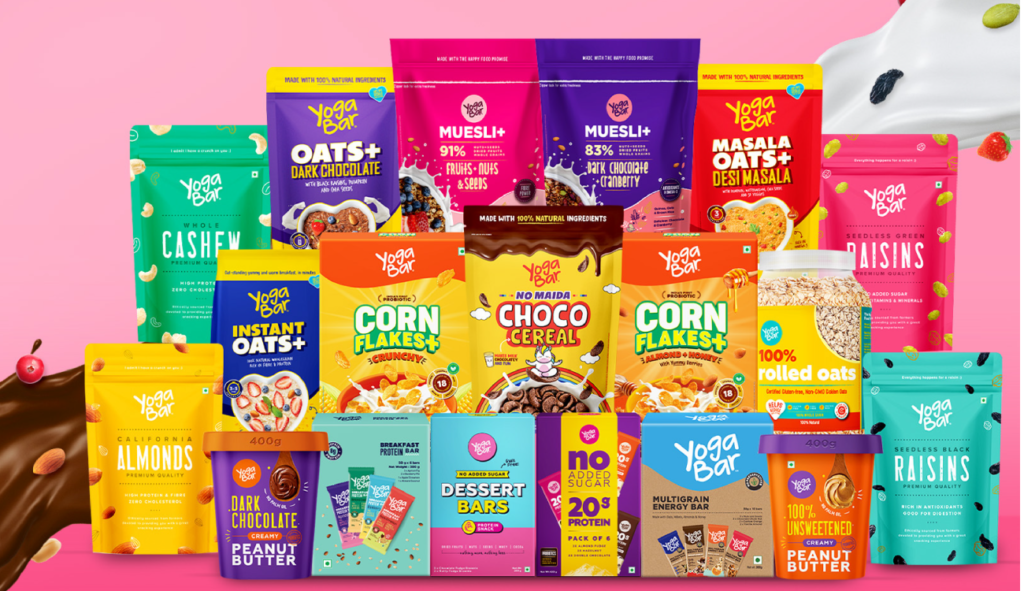
Yoga Bar’s strategy is not flashy. It is disciplined. In a market where startups rush to expand SKUs and categories, Yoga Bar did the opposite. They focused on one product category for years. Bars. They invested heavily in getting taste right, even working with 200+ bakers to refine the product.
They delayed packaging design until product-market fit was validated. They prioritised offline distribution early, instead of chasing D2C hype. This is a fundamentally different growth philosophy. Instead of building a brand around marketing, they built it around product credibility and repeat purchase.
Key strategic choices include:
- A strong focus on retention, with repeat purchase rates around 70%
- Minimal reliance on celebrity endorsements or ATL campaigns
- Data-driven decision making across product and distribution
- Gradual expansion into new categories only after establishing dominance in the initial one
From a scale perspective, the brand reached ₹68 crore in turnover before partial acquisition by ITC, Their revenue split today reflects a balanced omnichannel presence. What makes Yoga Bar different is not positioning alone. It is execution discipline. They did not try to win attention early. They focused on building a product people come back to. And that created a stronger foundation for scale.
04. Slurrp Farm: Cultural Relevance and Family-First Nutrition
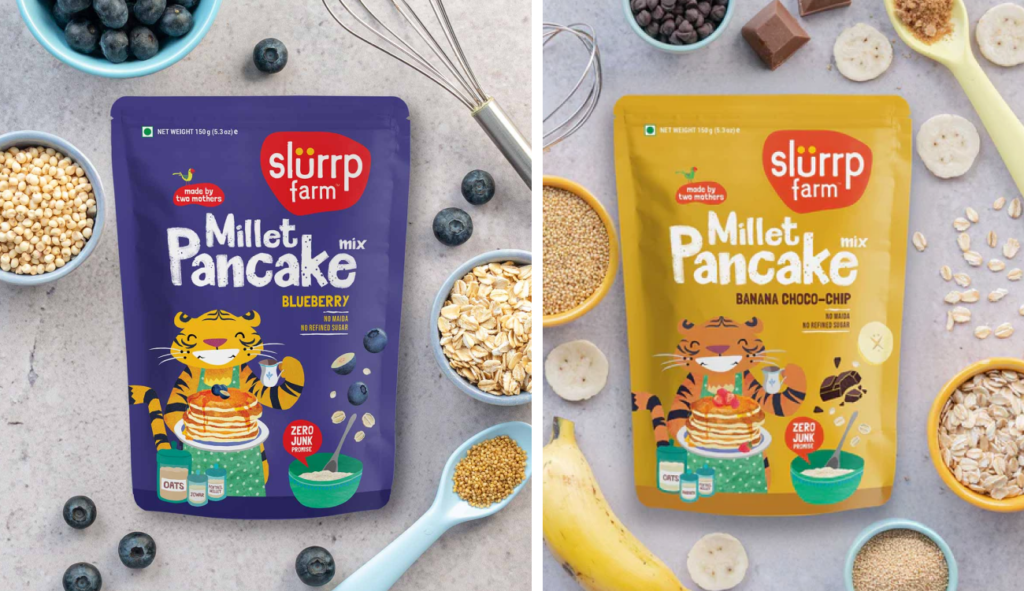
While many health brands focus on fitness or individual wellness, Slurrp Farm took a culturally rooted approach. Their strategy is built around one core idea:
Make traditional, wholesome food relevant for modern families.
This is a powerful positioning because it connects with both nostalgia and practicality. Instead of introducing completely new consumption behaviours, they modernise existing ones. Millets, traditional grains, and familiar formats are reimagined for convenience. This reduces adoption friction significantly.
Their strategy combines:
- Strong cultural storytelling rooted in Indian food traditions
- Clear targeting of mothers and young families
- Product formats that fit into daily routines, not just niche consumption moments
A communication tone that is educational but not intimidating. What makes Slurrp Farm different is the bridge it creates. Between tradition and modernity. Between nutrition and convenience. This allows them to scale beyond niche health audiences into mainstream households.
05. Super You: Functional Nutrition and Performance Positioning
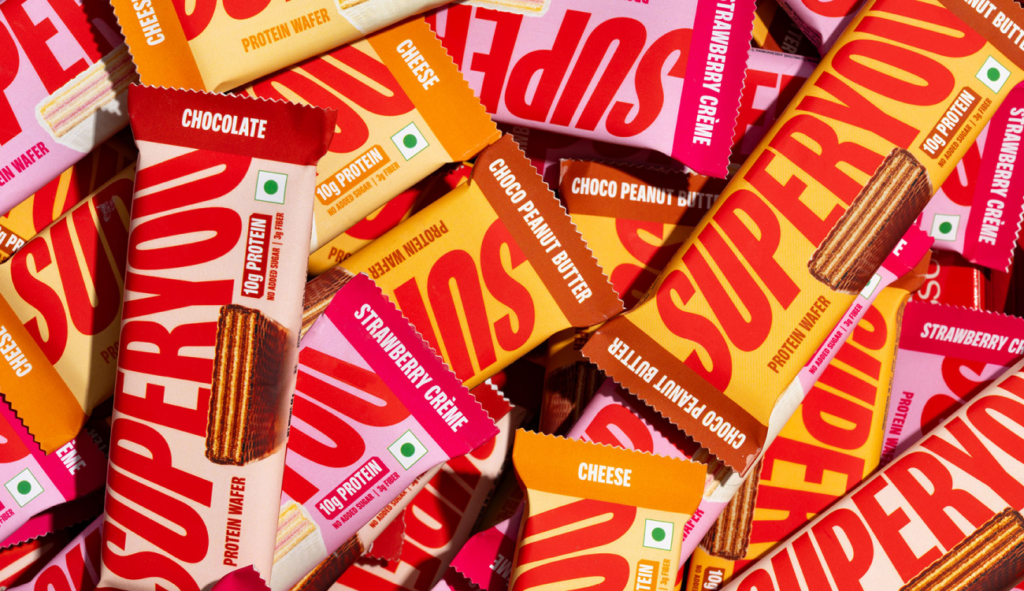
Super You operates in a more performance-driven segment of the health category. Their strategy is built around functional outcomes. Energy, protein, fitness, and performance. Unlike brands that focus on emotional or cultural positioning, Super You leans into utility.
This makes their communication sharper and more goal-oriented. Their strategy typically includes:
- Clear functional benefits tied to product usage
- Targeting fitness-conscious and performance-driven consumers
- Product formats that align with active lifestyles
- Messaging that focuses on results rather than philosophy
This approach works because it reduces ambiguity. Consumers know exactly what the product is for. What makes Super You different is clarity of function. They are not trying to appeal to everyone. They are solving a specific need. And that focus improves conversion.
Brand Strategy Snapshot: How Leading Food Brands Position Themselves
| Brand | One-Word Strategy | Core Positioning Lens | What They Really Sell | Key Strategic Edge |
|---|---|---|---|---|
| The Whole Truth | Transparency | Ingredient-first honesty | Trust in food decisions | Radical clarity across product, packaging, and content |
| Open Secret | Balance | Honest indulgence | Guilt-free snacking for families | Radical clarity across product, packaging, and content |
| Yoga Bar | Discipline | Category-first focus | Reliable healthy snacking habit | Deep product-market fit + high retention (~70%) |
| Slurrp Farm | Culture | Traditional nutrition | Modernised Indian family nutrition | Cultural familiarity + low adoption friction |
| Super You | Performance | Functional nutrition | Outcome-driven health benefits | Clear use-case clarity and goal-oriented messaging |
What Founders Need to Rethink in 2026
The biggest mindset shift founders need to make is this: Branding is not a layer added after the business. It is a system that shapes how the business grows. This means the strategy has to be defined early. Not perfectly, but clearly. You need to know:
- What your brand stands for beyond the product
- Who you are building for and who you are not
- What emotional or functional space you want to own
- How that shows up in packaging, communication, and experience
- How you will maintain consistency as you scale
Without these answers, every decision becomes reactive. With them, decisions become directional. And that is what creates momentum.
Packaging as Strategy, Not Decoration
Packaging is where brand strategy meets reality. Because this is where the decision happens. And in 2026, packaging has to perform under two very different conditions. On the physical shelf, where visibility matters. On the digital shelf, where clarity matters. In retail, your product is competing for attention from a distance. Colours, contrast, and form factor determine whether it gets noticed.
In digital environments, your product is often reduced to a small thumbnail. Here, readability and simplicity determine whether it gets clicked. This dual challenge exposes a weak strategy quickly. If your packaging relies on intricate design, subtle messaging, or complex storytelling, it may look great in isolation but fail in real environments. Strong packaging simplifies.
It prioritises one or two dominant cues. It communicates instantly. And most importantly, it aligns with positioning. If your brand stands for transparency, your packaging should reflect that. If your brand stands for indulgence, your packaging should evoke that. If there is a mismatch, the customer feels it. And in food, that friction reduces trust.
Final Thought
You can launch a food brand without strategy. Many do. But the moment you try to scale, the cracks appear. Because growth amplifies everything. If your foundation is unclear, growth multiplies confusion. If your foundation is strong, growth compounds clarity. In 2026, the brands that win are not the ones with the best ads or the widest distribution. They are the ones with the clearest point of view. They know what they stand for. They communicate it consistently.
And they build systems that reinforce that belief across every touchpoint. That is what makes a food brand scalable. And that is why strategy is no longer optional.