


If your product sits on a supermarket shelf, its job is to attract, convince, and convert in seconds. Now imagine the same product arriving at someone’s doorstep inside a delivery box. Same product. Completely different expectation. This is where most food brands get it wrong. They assume packaging is a single system that works everywhere. It isn’t.
Retail Packaging: Built to Win Attention on the Shelf
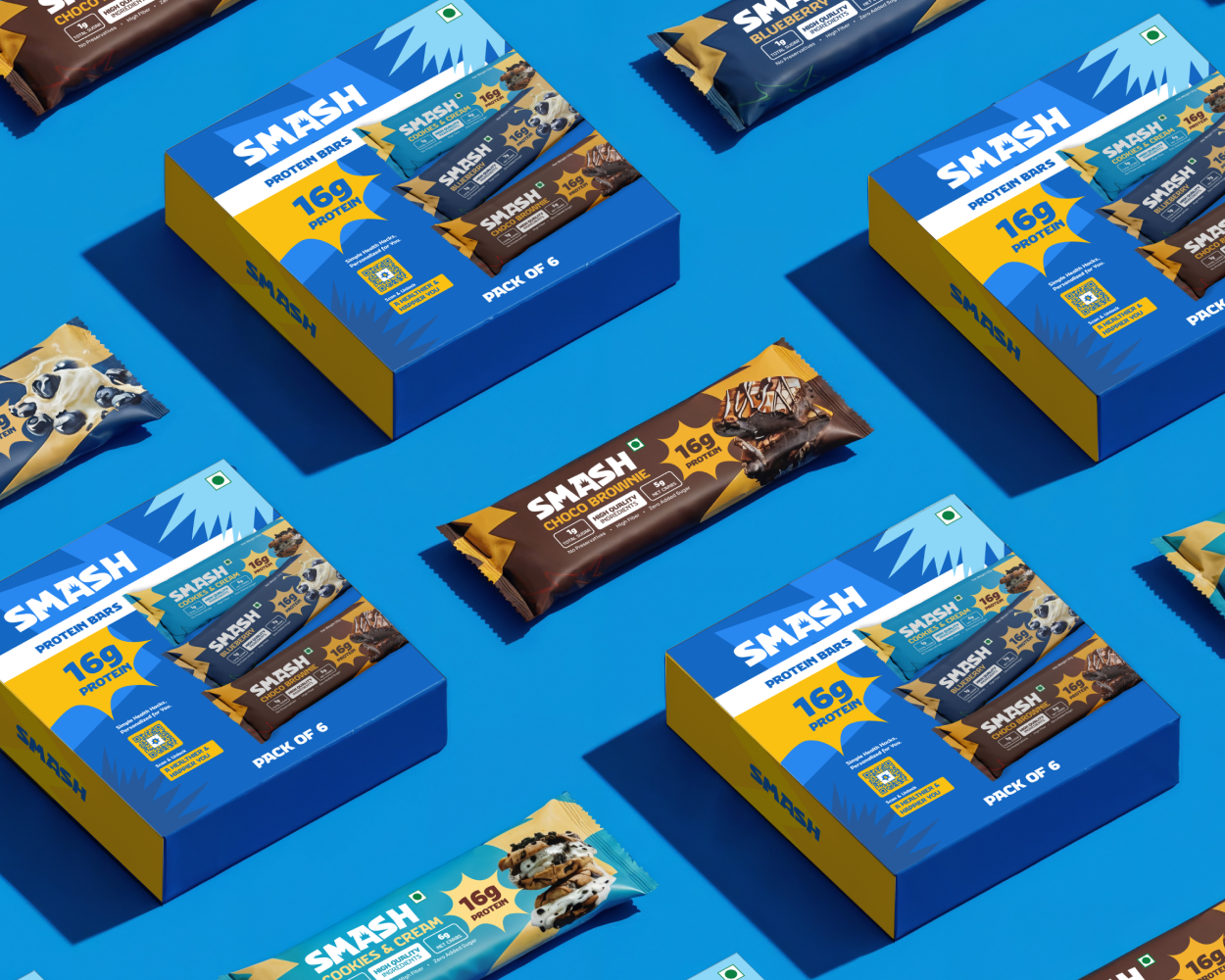
When a customer walks into a store, they are not researching. They are scanning. You have 3 to 7 seconds to get noticed. Quick Commerce packaging is designed to interrupt, attract, and persuade instantly. It works like a silent salesperson, competing with dozens of similar products placed right next to it. It must communicate:
- What the product is
- Why is it better
- Why does it justify its price all at a glance?
This is why E-Com/ Q-Com packaging focuses heavily on bold visuals, strong colour systems, typography, and front-facing communication. The goal is simple: get picked.
Delivery Packaging: Built for Experience and Trust
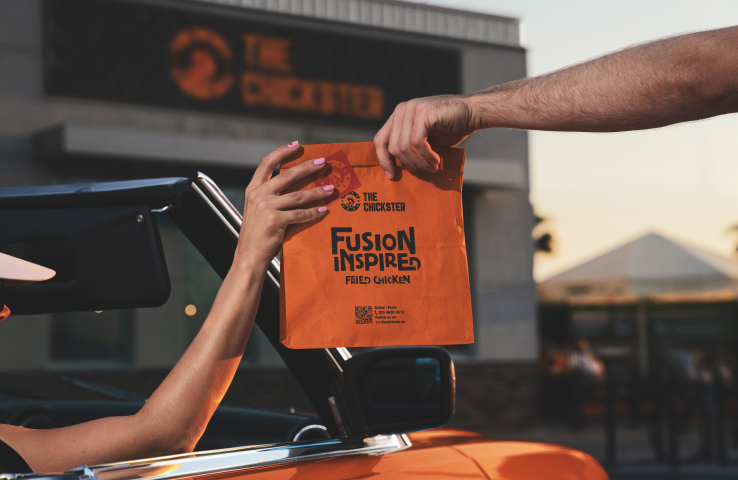
In delivery or D2C, the customer has already made the decision. There is no shelf competition. So packaging no longer needs to sell. It needs to deliver. Delivery packaging is designed around:
- Protection during transit
- Maintaining product quality
- Creating a memorable unboxing experience
A product might be handled multiple times before reaching the customer, which means durability becomes non-negotiable. But beyond protection, this is where brands build emotional connection. A well-designed delivery package reassures the customer that they made the right choice.
The Core Difference Most Brands Miss
Retail packaging drives conversion. Delivery packaging drives retention. Retail packaging says, “Pick me.” Delivery packaging says, “You made the right choice.” This shift in mindset is critical. And this is exactly where most brands fail. They design one packaging system and try to force it across both environments. But shelf physics and shipping logistics are not the same.
Key Differences Between Retail & Delivery Packaging
Retail Packaging Is Designed for Visibility and Quick Decisions.
Retail packaging exists in environments where customers make decisions within seconds. Whether a product is placed on shelves or listed on quick-commerce platforms, it must be easy to identify, understand, and choose. The structure of retail packaging is built to fit shelves, stack neatly, and remain visually accessible. In such settings, clarity and recognition matter more than storytelling.
The visual hierarchy on retail packaging is front-loaded because customers are scanning multiple options quickly. The front of the pack must immediately communicate the brand name, product type, and primary benefit. The job of retail packaging is not to tell a deep story, but to enable fast decisions. For food founders, this means that clarity and simplicity often outperform complexity and decoration.
Delivery Packaging Is Designed for Movement and Protection
Delivery packaging operates in a completely different environment. Instead of competing for attention, it must survive a long and unpredictable journey from warehouse to customer. Products often move through multiple handling stages across warehouses, vehicles, and last-mile delivery networks. This exposes them to impact, stacking pressure, and environmental factors.
Because of this, delivery packaging prioritises durability over display. It must be strong enough to absorb shocks, protect the product from damage, and maintain integrity during transport. Structural elements like corrugated strength, protective layers, and cushioning play a critical role in preventing breakage and reducing returns. For food founders, overlooking this aspect often leads to damaged products, customer dissatisfaction, and unnecessary operational costs.
Retail Packaging Persuades, Delivery Packaging Builds Relationships
The purpose of communication changes significantly between retail and delivery formats. Retail packaging is designed to persuade customers at the moment of decision. It answers immediate questions about what the product is, why it matters, and why it is worth buying. The goal is conversion.
Delivery packaging plays a different role because the purchase has already been made. This allows brands to shift focus from persuasion to relationship building. Delivery packaging can carry deeper brand narratives, thoughtful inserts, QR codes, or usage instructions that extend the brand experience beyond the product itself. In a time where unboxing content shapes perception, delivery packaging becomes a powerful tool for reinforcing brand identity and building long-term loyalty.
Cost, Logistics, and the Supply Chain Reality
Retail packaging is typically optimised for visibility and shelf impact, while delivery packaging must be optimised for logistics and cost efficiency. Shipping costs are influenced by weight and volume, and packaging decisions directly impact these factors. Even minor adjustments in packaging size, thickness, or material can significantly affect shipping costs when scaled across thousands of orders.
Inefficient packaging can lead to higher transportation costs, increased product damage, and reduced profitability. This is why packaging should not be seen only as a design decision but also as a supply chain decision. For food founders, aligning packaging design with logistics realities is essential for sustainable growth.
Where Most Food Founders Go Wrong
Many food brands make the mistake of using a single packaging system across both retail and delivery channels. While this may seem efficient initially, it often leads to problems as the business scales. Packaging that performs well on shelves may fail to protect products during shipping, while packaging built only for durability may lack the visual appeal needed for retail environments.
This approach results in weak shelf presence, higher damage rates, and inconsistent customer experiences. Convenience becomes the driving force instead of strategy, and this approach eventually breaks under scale. The most successful food founders understand that retail packaging and delivery packaging are not interchangeable. They are separate tools that serve different strategic purposes, and when designed intentionally, they help build stronger brands and more resilient businesses.
Real Life Application: Smash Protein Bars & Chickster
When working on brands like Smash Protein Bars and The Chickster, the goal wasn’t just to make packaging look good. It was to make it work across environments.
- For Smash, the packaging system had to stand out on shelves while also being scalable across multiple SKUs. We had followed the same packaging with details like FSSAI registration number, contact details, ingredients, composition, brand story, etc.
- For Chickster, packaging had to perform in a fast-paced delivery environment, ensuring consistency, durability, and brand recall across every order. Only the central narrative was used to make sure that the communication remains the same for a ‘use and throw’ box, where the decision of purchase will not be influenced.
In both cases, the thinking was not “one design fits all”. It was “one brand, adapted systems”.
Why Storytelling Matters in Both
Storytelling is not optional in packaging. It just plays different roles.
In retail, storytelling needs to be fast, sharp, and visible. It should answer: What is this? Why should I care? In delivery, storytelling can go deeper. It can build: Emotional connection, Brand personality, Recall and loyalty. This is where inserts, messaging, and experience design come into play. The best brands don’t just deliver products. They deliver a story.
Should You Have Separate Packaging Systems?
In most cases, yes. Because:
- Retail and delivery solve different problems
- Customer behaviour is different
- Logistics are different
- Expectations are different
A single system might feel easier in the short term. But it creates limitations when you scale. Understand how we craft such stories into packaging with our exclusive processes in our Packaging Design & Brand Experience service.
Final Thought
Retail packaging and delivery packaging are not the same thing. They solve different problems, operate in different environments, and are judged on completely different parameters. If your brand is growing across channels, treating them as one system will eventually break something, either visibility, experience, or margins. Packaging is not just design. It is context.